
Breakfast & Baking · 15 Ingredients
Soft Homemade Cinnamon Rolls
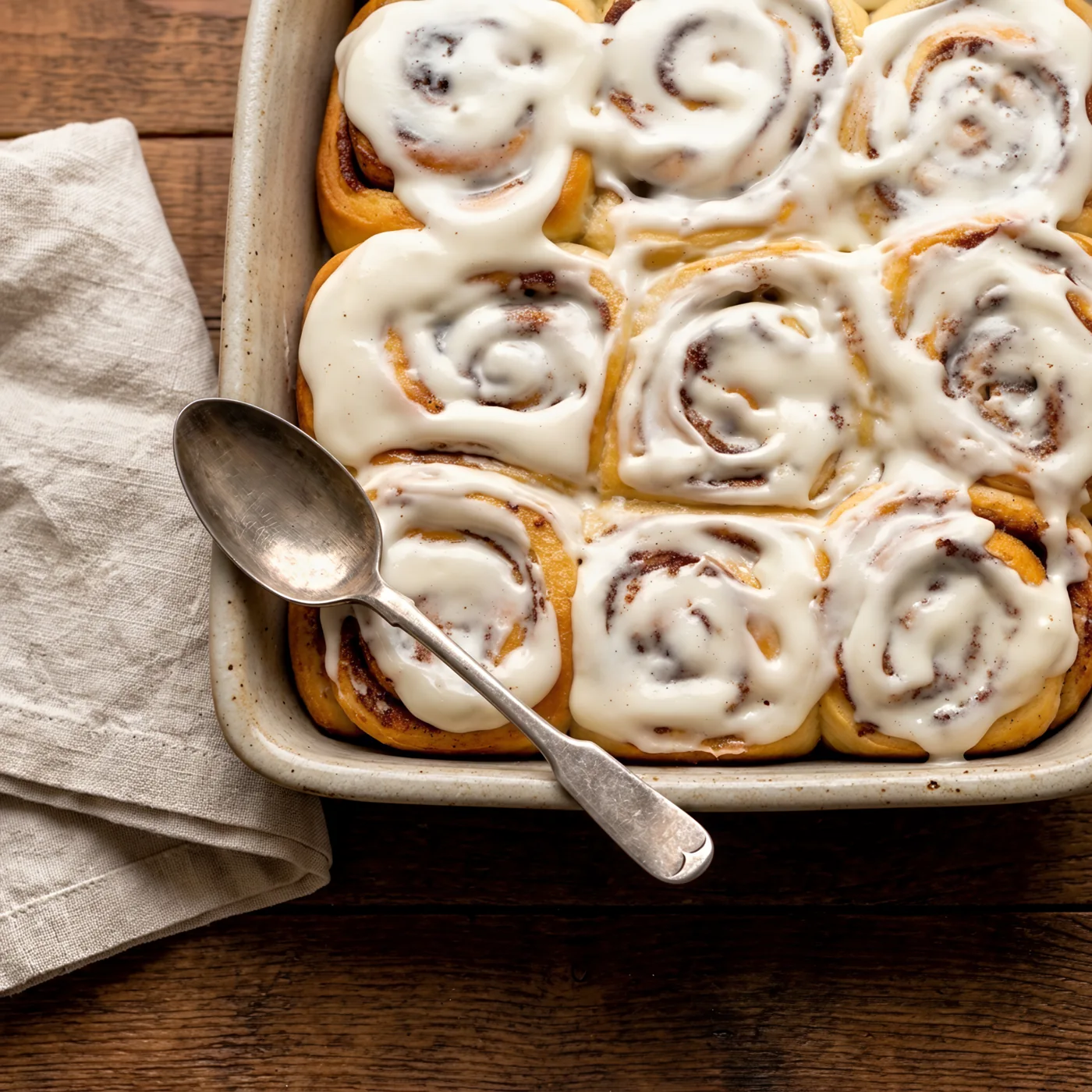
Make 12 soft cinnamon rolls with brown-sugar filling and cream cheese icing. Follow two rises on the same day or chill the shaped rolls overnight.
By Spare Hours · · Adapted from Sally’s Baking Addiction
- Prep*
- 3 hr 30 min
- Cook*
- 25 min
- Total*
- 4 hr
- Makes
- 12 rolls
*Source recipe estimates. The same-day recipe takes about 4 hours, including both rises. The overnight option adds 8–12 hours in the refrigerator and requires a 1–2-hour rise at room temperature before baking.
Before You Begin
These cinnamon rolls wrap a butter, brown-sugar and cinnamon filling in a soft yeast dough, then finish with cream cheese icing. The recipe makes 12 rolls in a 9×13-inch pan.
Plan around the two rises rather than rushing the dough. You can bake the rolls in one day or refrigerate them after shaping, then let them rise the next morning before baking.
- Warm the milk to about 110°F (43°C), and bring the dough butter, eggs and cream cheese to room temperature.
- Have a stand mixer with a dough hook, or a large bowl with a wooden spoon or silicone spatula, plus a rolling pin and 9×13-inch baking dish ready.
- Allow about 4 hours for the same-day method. For overnight rolls, plan on 8–12 hours of refrigeration followed by a 1–2-hour morning rise.
Printable Recipe Card
Soft Homemade Cinnamon Rolls
12 rolls · 15 ingredients. Adapted from Sally’s Baking Addiction. The same-day recipe takes about 4 hours, including both rises. The overnight option adds 8–12 hours in the refrigerator and requires a 1–2-hour rise at room temperature before baking.
Ingredients
Check off each ingredient as you prepare it.
Dough
Cinnamon Filling
Cream Cheese Icing
Cooking Steps
Start the yeast mixture
Whisk the warm milk, 2 tablespoons of the granulated sugar and the yeast in a stand-mixer bowl fitted with a dough hook or paddle. Cover and leave for 5–10 minutes, until the surface is foamy. Without a stand mixer, use a large mixing bowl and a wooden spoon or silicone spatula for the dough; a hand mixer's beaters tend to catch the sticky mixture.
Mix the dough
Add the remaining ½ cup (100g) sugar and the dough butter. Beat on medium until the butter begins to break up. Add about 1 cup (125g) flour, the eggs and salt, then mix on low for 30 seconds. Scrape the bowl, add the remaining flour and mix on medium for about 2 minutes, until the dough comes together and pulls away from the sides. It should stay soft and slightly tacky. If it clings heavily to the bowl, add flour 1 tablespoon at a time. If it is dry or crumbly, add milk 1 teaspoon at a time, mixing after each addition.
Knead until elastic
Switch to the dough hook if needed and mix on low for 5 full minutes, or knead by hand on a lightly floured surface for 5 full minutes. If the dough becomes too sticky, add flour only 1 teaspoon at a time; too much will dry it out. The finished dough should feel smooth, supple and elastic, and a finger indentation should spring back slowly. For a second check, stretch a golf-ball-sized piece thin enough for light to pass through without tearing. If it tears before becoming translucent, keep kneading.
Let the dough rise
Lightly coat a large bowl with oil, butter or nonstick spray. Turn the dough in the bowl to coat it on all sides, then cover with plastic wrap or a clean kitchen towel. Leave at room temperature for 1½–2 hours, until doubled in size.
Prepare the baking pan
Grease the bottom and sides of a 9×13-inch glass or metal baking dish, or line it with parchment paper.
Roll out the dough
Punch down the risen dough to release the air. On a lightly floured surface, use a lightly floured rolling pin to make a smooth, evenly thick 12×18-inch rectangle. If the dough keeps shrinking back, cover it loosely and rest for 10 minutes before continuing.
Fill and shape the rolls
Spread the softened filling butter across the dough; soften it for a few seconds in the microwave if necessary. Mix the brown sugar and cinnamon in a small bowl and scatter evenly over the butter. Roll tightly into an 18-inch log. Sprinkle any escaped filling back onto the roll. Use a very sharp knife to cut 12 equal pieces, approximately 1½ inches wide, and arrange them in the prepared pan.
Let the shaped rolls rise
Cover the pan and let the rolls rise for about 1 hour, until puffy. For the overnight method, follow the refrigerated preparation note instead of this room-temperature rise.
Heat the oven
Preheat the oven to 350°F (177°C).
Bake and cool briefly
Bake for about 25–28 minutes, until the tops are lightly browned, rotating the pan halfway through. If the tops brown too quickly, loosely cover the pan with foil. Set the pan on a cooling rack for about 10 minutes while you prepare the icing.
Make the icing
Beat the softened cream cheese in a large bowl with a handheld mixer or a stand mixer fitted with a paddle or whisk, using medium speed until smooth. Add the confectioners' sugar, cream or milk, and vanilla. Mix on low for 30 seconds, then on high for 1 minute. Spread over the warm rolls and serve immediately.
Store leftover rolls
Cover frosted or unfrosted rolls tightly. Keep at room temperature for up to 2 days or refrigerate for up to 5 days.
Recipe Notes
Overnight preparation
Complete the recipe through shaping and placing the rolls in the pan. Cover and refrigerate for 8–12 hours; do not exceed 16 hours. In the morning, remove the pan from the refrigerator and leave it covered at room temperature for 1–2 hours, until risen. Continue with preheating and baking.
Freezing shaped rolls
Freeze the shaped rolls before their second rise for up to 3 months. Thaw overnight in the refrigerator, then allow 1½–2 hours at room temperature for the rolls to rise before baking.
Freezing partly baked rolls
An alternative is to bake the risen rolls for 10 minutes, cool completely, then cover and freeze for up to 3 months. Thaw overnight in the refrigerator, leave at room temperature for 30 minutes, then finish baking for 15–20 minutes. Fully baked rolls can also be frozen for up to 3 months.
Milk and yeast
Whole milk gives the intended rich dough; buttermilk is another option. Reduced-fat, low-fat or nondairy milk can work in a pinch, but do not use nonfat milk. Both active dry and instant yeast follow the same method, although active dry yeast may need slightly longer rises.
Spare Hours · sparehours.puzzlegames.app/recipes/homemade-cinnamon-rolls/ · Recipe source: https://sallysbakingaddiction.com/overnight-cinnamon-rolls/
Recipe Source
Adapted from Sally’s Baking Addiction: Homemade Overnight Cinnamon Rolls. Ingredient amounts, method details and source time estimates come from the supplied recipe record. The instructions have been rewritten for this page.
The food image is an illustration supplied in this collection, derived from the source recipe photograph. Image credits
